C-Section Scar Massage
Scar massage after a caesarean, only after the wound has fully healed and after discussing it with your clinician.
Why scar massage?
A caesarean goes deeper than the skin
A caesarean leaves a scar that takes time to heal. A scar may feel different from the surrounding skin. Seek medical assessment of pain, pulling or altered sensation where needed. Massage is not an established way to release internal adhesions.
Discuss the scar
Discuss what you feel and follow your treating clinician’s aftercare instructions.
Reduced sensitivity
Discuss changes in sensation around a scar with your clinician. We do not promise that massage repairs nerves or restores sensation.
Abdominal and pelvic symptoms
Abdominal, pelvic floor, hip or back symptoms can have different causes. Have them assessed instead of attributing them to the scar without an examination.
Our approach
Gently and by agreement
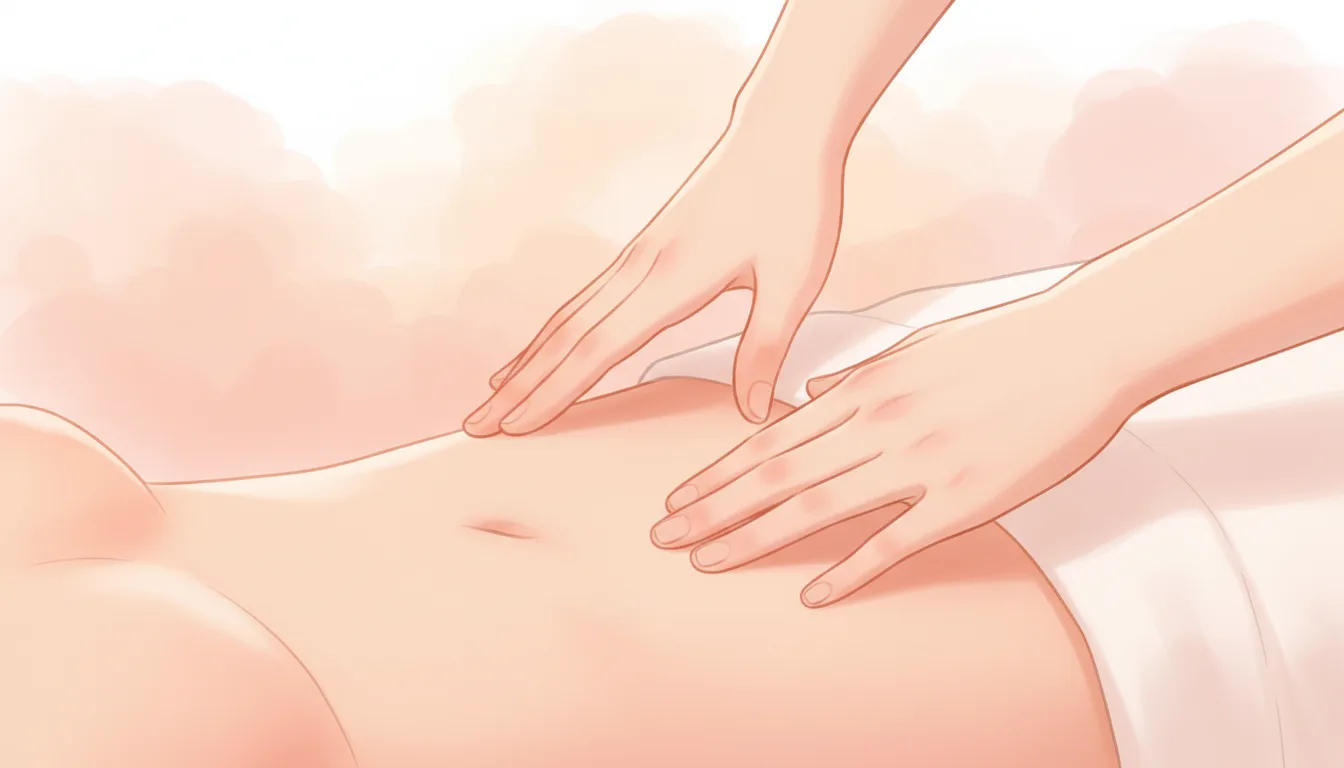
After full wound healing you discuss whether gentle massage of the scar area fits your clinician’s advice. Report pain immediately. The aim is comfort; an effect on internal adhesions is not promised.
Discuss which parts of a postpartum appointment you want. Treatment does not replace medical aftercare, pelvic health physiotherapy or wound care.
- C-section scar — recent or older
- Pulling or tight feeling when moving
- Reduced sensitivity around the scar
- Overhang of the abdominal skin above the scar
- Scar adhering to the muscle layer
Timing
When can you start?
Waiting for the right moment matters — starting too early can impede healing.
Full healing first
The wound must be fully healed. Ask your midwife or doctor whether massage is suitable for you.
Agree on when to start
A fixed week or month is not evidence that your wound has healed sufficiently. Follow your own aftercare advice.
For an older scar too
Discuss any symptoms and expectations. We do not guarantee restored mobility or release of adhesions through massage.
Pricing
Transparent prices, no surprises
Price is based on duration, not on treatment type. Session card valid for 10 weeks from the first treatment.
| Duration | Single session | 5-Session card | Per session (card) |
|---|---|---|---|
| 30 minutes | €70 | €325 | €65/session |
| 60 minutes | €140 | €650 | €130/session |
| 90 minutes | €210 | €975 | €195/session |
Frequently asked questions
Questions about scar massage
When can I start after a caesarean section? +
Only once the wound is fully healed and your clinician considers massage suitable. The number of weeks since surgery is not enough by itself. Follow your doctor’s or midwife’s individual advice.
Why is scar massage after a caesarean important? +
Some people find gentle massage of a fully healed scar comfortable. It is not a compulsory recovery step and we do not promise that it releases internal adhesions. Discuss symptoms with your clinician.
How many treatments are needed? +
There is no established fixed number of Bodyfix sessions for scar recovery. Discuss your expectations and decide on follow-up based on suitability and your experience.
Is scar massage also worthwhile for older scars? +
With an older scar you can discuss whether massage of the area is comfortable and suitable. Lasting change, restored sensation or release of adhesions is not guaranteed.
Is the treatment painful? +
The treatment should stay within your comfort. Report pain immediately so pressure can be adjusted or the massage stopped. Discuss unusual or persistent symptoms with your clinician.
Can I combine scar massage with postpartum recovery? +
During the consultation you can discuss which areas you want massaged and what fits your clinician’s advice. There is no promise that one programme resolves several postpartum symptoms.
Sources and medical background
NHS: Scars · NCCIH: Massage Therapy — What You Need To Know
These sources provide general information; they do not establish the effectiveness of the Bodyfix Method. Checked on 10 September 2026.