The Ultimate Bodyfix Massage
Buccal massage and facial massage in one session — from the inside first, then the outside. English spoken, Amsterdam-Zuid.
The full method
Two treatments that need each other
Bodyfix has two facial treatments that stand on their own. Buccal massage works the chewing muscles from inside the cheek. The natural facelift works the connective tissue and muscles of the face, jawline and neck from the outside. Each does something the other cannot reach — and that is the whole reason this session exists: both, in one appointment, in the order that makes the work land better.
The face is not a separate zone. Jaw, neck and throat form one chain, and tension anywhere in that chain pulls on everything around it. Work only from the outside and you never reach the deep chewing muscles. Work only from the inside and the connective tissue around them stays untouched. This session works the whole chain.
If you found this on TikTok
Same technique, a lot of different names
Online this work circulates under a handful of names — buccal massage, TMJ massage, inner-cheek massage, jaw massage. Most of the clips show the same thing: a gloved hand working the chewing muscles from inside the cheek. What the clips leave out is everything around it. What was looked at first, in what order the work was done, and what was said afterwards about what it will and will not do.
That context is the part we care about. At Bodyfix the intra-oral technique is not a standalone trick; it is one step inside a session that starts with looking and ends with an honest conversation. It is performed by HBO-trained physiotherapists, in English, in Amsterdam-Zuid.
What happens in one session
From the inside, then from the outside
Bodyreading
Every treatment starts with looking: how the jaw sits, where the tension is held, how the tissue in the face and neck moves. We look before we apply a protocol — only then do we decide what this session should be.
Buccal — the inside
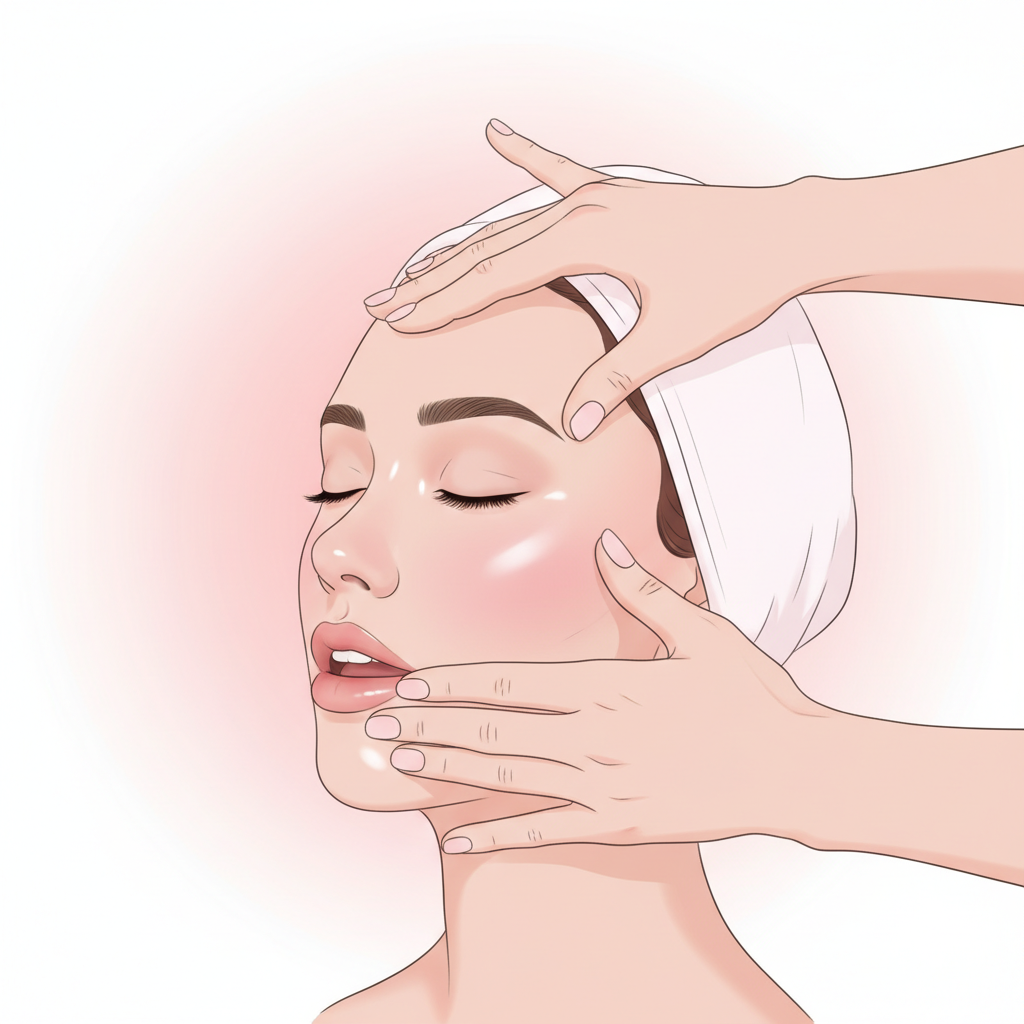
With a glove, the chewing muscles are worked from inside the mouth, supported from the outside. That reaches the deeper muscle layers around the masseter and the pterygoids, where external work does not get to. Short and targeted.
Face and neck — the outside
Then the manual connective tissue massage of the face, jawline and neck, with the light lymphatic drainage technique where it fits. A released chewing muscle makes this part easier to do well — which is why it comes second, not first.
The plan
At the end we go through what we found and what it would take. No standard course: what we suggest follows from your situation, not from a package we already had on the shelf.
Who it is for
When the combination makes sense
This session is for people who want more than either half on its own. In practice, people book it from one of four starting points.
Jaw tension
Clenching or grinding, a jaw that feels locked in the morning, tension running up into the neck and temples. Often there is already a night guard from a dentist, which protects the teeth but does not release the muscles.
A face that holds on
A tight, tired expression that sleep does not fix. Chronic tension changes how a face sits, and that is precisely the layer manual work reaches.
Skin and connective tissue
A changing jawline or slackening skin around the jaw and neck — a connective tissue question, in which the tension underneath usually plays a part.
No needles
For people who deliberately choose the manual route, without injectables and without devices. Hands only, and a method we developed ourselves.
New to Amsterdam
No referral needed, no Dutch required
If you moved here, your health network did not move with you. No dentist you already trust, no huisarts you have built a history with, and a system that works differently from the one you grew up with. That is a real obstacle, not a marketing angle — and it is the reason a lot of people put this kind of thing off for years.
You can book with us directly. Everything — the intake, the treatment, the aftercare advice — happens in English. We are ten minutes from Zuidas, at Legmeerplein 7 in Amsterdam-Zuid.
And if what we find belongs with someone else, we will say so. We work alongside dental care, never instead of it, and we will tell you what to ask for when you go.
Honest upfront
What this treatment does and does not do
A great deal gets promised in this field. We would rather not. So here is what to expect, and where the line is, before you book anything.
What we do
We work on tension in the chewing musculature, loosen the connective tissue of the face, jawline and neck, and address the chain as a whole rather than one spot at a time. Many people notice more room and less grip in the jaw after the first session.
What we do not do
We do not address structural TMJ problems. A jaw that locks, a suspected disc displacement, or unexplained complaints in the face belong with a dentist, a GP or an orofacial specialist. In that case we refer you on rather than working around it.
What we do not promise
This session does not stop grinding — that has a stress and sleep component well outside our hands. It does not replace a night guard, orthodontics or medical treatment. And it does not change bone structure.
How long it lasts
That depends on how long the pattern has existed and what keeps feeding it. Maintenance is part of the picture. Anyone promising a permanent result after one session is promising too much.
Practical
Hygiene, comfort and duration
The intra-oral part is always done with fresh single-use gloves, following the standard hygiene protocol. If you have a latex allergy we work with nitrile. If you have a sensitive gag reflex, tell us beforehand and we adjust the approach — it is the question everyone has and nobody asks out loud.
The buccal part is short and firm; on a tense chewing muscle that can feel intense. You set the pace, and we never work through a limit you have given us. You can stop at any point. The session takes 60 or 90 minutes; which length fits is decided in the intake.
Reasons to wait. An active infection in the mouth, a recent procedure or extraction in the treatment area, or a recent injectable treatment in the face: after botox we wait two weeks, after lip fillers one week, before working in the treated area. If you have had injectables, mention it at the intake — we plan the starting moment around it.
Pricing
What the combined session costs
A single session is €110; a package of five sessions is €500. Which length and which combination actually fit is decided in the free intake, before you book anything.
How many sessions it takes differs per person — most trajectories run between five and ten sessions, sometimes more. What you actually need comes out of the bodyreading, and we would rather tell you afterwards than sell it beforehand.
Frequently asked questions
Everything about the Ultimate Bodyfix Massage
What is the Ultimate Bodyfix Massage? +
It is two of our facial treatments in one session. First the buccal part: with a glove, the chewing muscles are worked from inside the cheek, supported from the outside. Then the manual connective tissue massage of the face, jawline and neck. Same session, same hands, in that order.
How is it different from a standalone buccal massage? +
A standalone buccal massage works the chewing muscles from the inside only. This session adds the external connective tissue work on the face, jawline and neck, in the order that makes the outside work easier: a released chewing muscle first, the surrounding tissue after.
Is this a TMJ massage? +
It is what most people mean when they search for one, but we want to be precise about it. We work on muscular and connective tissue tension in the jaw, face and neck. We do not work on the TMJ itself and we do not address structural TMJ problems. If we suspect one, we refer you on — to a dentist, an orthodontist or an orofacial physiotherapist.
Is buccal massage hygienic? +
Yes. The intra-oral part is always done with fresh single-use gloves, following the standard hygiene protocol. If you have a latex allergy we use nitrile. If you have a sensitive gag reflex, say so beforehand and we adjust the approach.
What does it feel like? +
The intra-oral part is short and firm. On a tense chewing muscle that can feel intense — not intense for the sake of it. You set the pace and the pressure, and we never work through a limit you have given us. The face and neck work that follows is calmer and slower.
How many sessions will I need? +
That differs per person and depends on how long the tension pattern has existed — most trajectories run between five and ten sessions, sometimes more. Most people notice a difference after the first session. What a longer-lasting effect would take is something we discuss in the free bodyreading — never sold as a fixed package upfront.
Will this change the shape of my face? +
Chronic tension gives a held, tired expression, and that can visibly change. Bone structure and the underlying facial architecture do not change, and we do not claim otherwise.
I have a night guard from my dentist. Is this still useful? +
They do different things. A night guard protects the teeth from damage caused by grinding; it does not release the muscles doing the clenching. That is exactly why a lot of our jaw clients come in.
I do not have a dentist in the Netherlands yet. Can I still come? +
Yes. You do not need a referral to book with us, and no Dutch is required — the intake, the treatment and the aftercare advice all happen in English. We work alongside dental care and never in place of it, so if what we find belongs with a dentist, we will say so and tell you what to ask for.
How long does the session take, and what does it cost? +
Sixty or ninety minutes. Which length fits is decided together in the intake, based on what the bodyreading shows. A single session is €110; a package of five sessions is €500. All packages and prices →